Enclosures, U channels, L brackets, covers, trays, cabinet panels, and flanged plates usually depend on accurate bending.
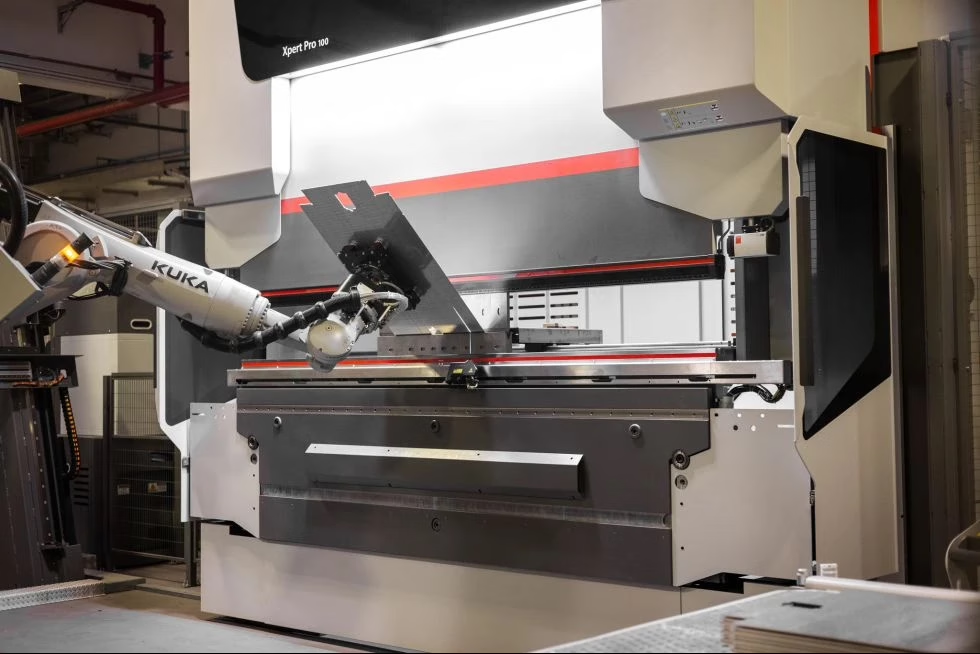
CNC bending guide
CNC Bending Service: RFQ Checklist for Sheet Metal Parts
CNC bending is often where a flat laser-cut blank becomes a useful enclosure, bracket, cover, or structural part. For overseas buyers, the key is not only press brake capacity. The quote needs enough detail to avoid bend conflicts, cosmetic damage, and assembly fit issues.
When CNC bending is the right process
The process is a strong fit when the part can be formed from sheet stock and does not require heavy machining or cast geometry.
If a part has tight inside dimensions, deep flanges, narrow returns, or cosmetic surfaces, those details should be flagged before quoting.
Drawing details that prevent quoting mistakes
Mark inside and outside dimensions clearly. Mixed dimensioning can create confusion after bending allowance is applied.
Call out bend radius, bend angle, material thickness, grain direction if relevant, and any cosmetic side that needs protection.
Provide flat DXF files only when they are confirmed. If the supplier should calculate flat patterns, provide the formed drawing and 3D file.
DFM points buyers should review
Hole-to-bend distance, slot distortion, flange height, tooling access, and bend sequence can all affect feasibility.
A very tight radius may increase cracking risk depending on material and grain direction.
Powder coated or brushed visible surfaces need handling protection through cutting, bending, and packing.
Related service path
For cut-and-bend projects, start with the laser cutting service page if most parts are flat profiles.
For enclosures or welded assemblies, use the sheet metal fabrication page so finishing and packing are included in the quote scope.
Need a CNC bending quote for a real project?
Send drawings, material, thickness, bend notes, quantity, finish, and destination through the commercial CNC bending RFQ page.