Acero inoxidable
Adecuado cuando importan la resistencia a la corrosión o la superficie visible. Indique grado, cara visible, film protector, dirección de acabado y limpieza requerida.
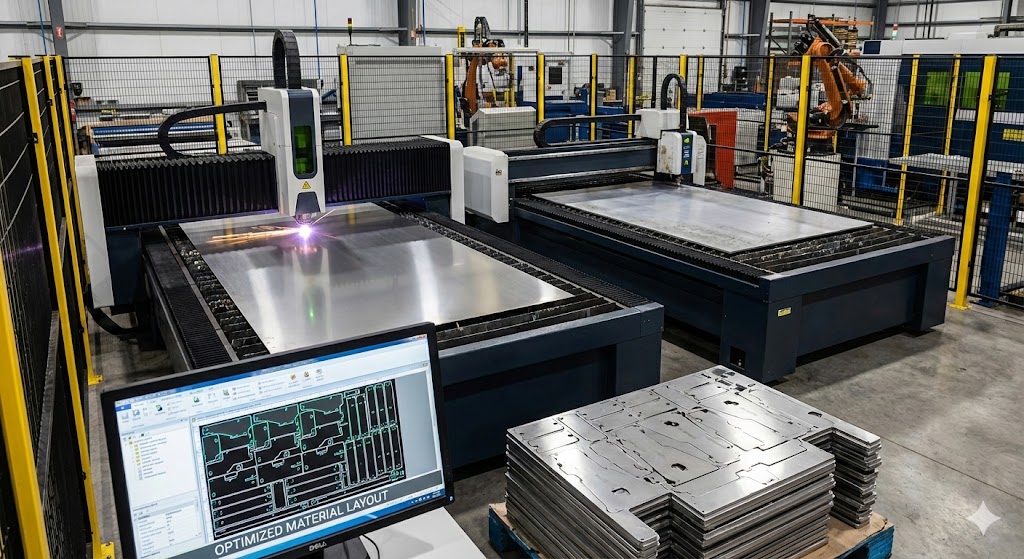
Corte láser de precisión
Black Iron Metal fabrica perfiles de chapa cortados por láser según planos y, cuando el proyecto lo requiere, combina el corte con doblado CNC, soldadura, hardware, acabado, inspección y embalaje para exportación.
Use esta página cuando su proyecto necesita bordes limpios, blanks repetibles o procesos posteriores después del corte.
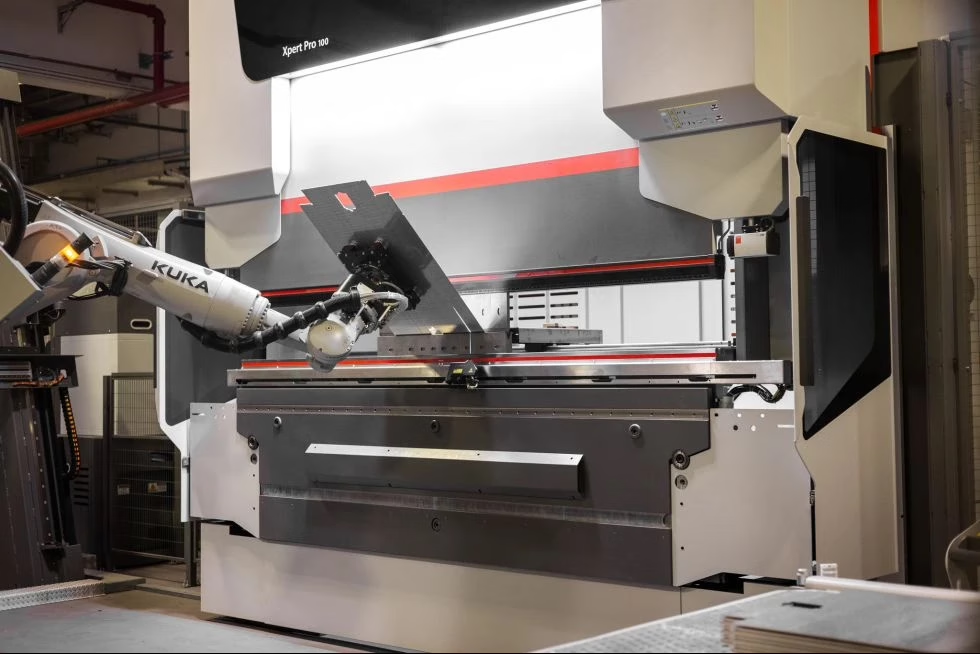
Defina en el RFQ el grado de material, cara visible, inspección y ruta de proceso posterior antes de planificar el corte.
Adecuado cuando importan la resistencia a la corrosión o la superficie visible. Indique grado, cara visible, film protector, dirección de acabado y limpieza requerida.
Confirme aleación y temple, especialmente si habrá doblado. Marque caras visibles, protección superficial, límites de rebaba y agujeros críticos desde el inicio.
Común para soportes, bastidores, cubiertas y piezas estructurales. Indique si habrá pintura en polvo, pintura, recubrimiento o soldadura.
Use estas rutas con imagen para conectar perfiles planos cortados con doblado, soldadura, productos de carcasa, acabado, inspección y embalaje de exportación.
Líneas de doblez, longitud de pestaña, distancia agujero-doblez, planitud, dirección del material y geometría de soporte formado.

Pestañas, ranuras, miembros de bastidor, acceso de soldadura, riesgo de distorsión, limpieza y planificación de fixture antes de cortar.
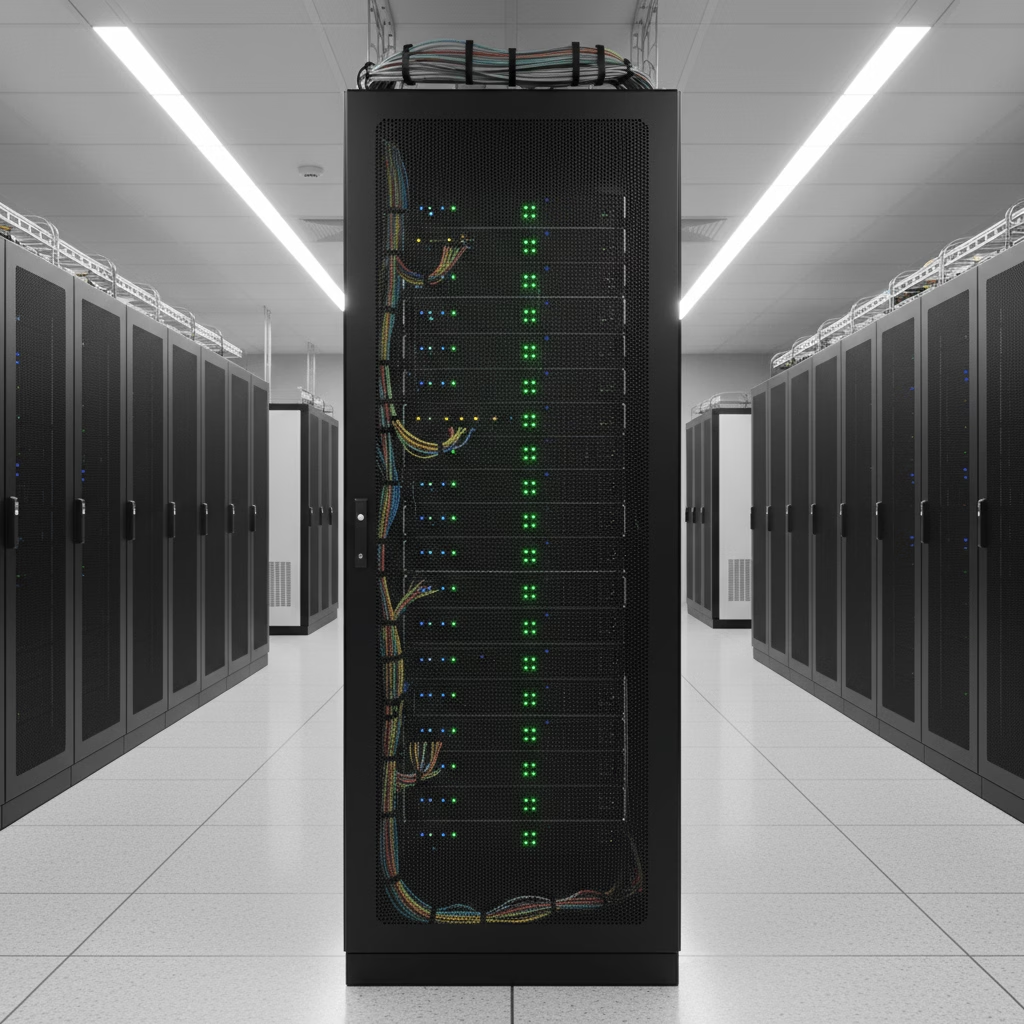
Puertas, placas de cable, placas de montaje, patrones de ventilación, agujeros de hardware y blanks listos para pintura.

Secuencia de hardware, etiquetas, separadores, embalaje por kit, límites de cartón, reglas de pallet y línea base de repetición.
| Dato | Por qué importa | Detalle recomendado |
|---|---|---|
| Perfil DXF o DWG | Reduce errores de interpretación y acelera la revisión de nesting | Contorno limpio, unidades, revisión y confirmación de escala |
| Material y espesor | Define ruta de proceso, calidad de borde y costo | Grado, espesor, protección superficial y dirección si aplica |
| Tolerancias y medidas críticas | Separa corte estándar de características críticas para inspección | Marcar agujeros, ranuras, bordes, superficies de ajuste y líneas de doblez |
| Procesos secundarios | Evita cotizar solo corte cuando se necesitan componentes terminados | Doblado, soldadura, avellanado, roscado, acabado y embalaje |
| Notas de inspección | Alinea criterios de aceptación antes de producir | Planitud, dirección de rebaba, marcas de calor, caras visibles y borde listo para acabado |
El corte láser suele ser el primer paso. Estas páginas ayudan a definir material, caras visibles, riesgo de doblado y requisitos de soldadura antes de cotizar.
Revisar grado, dirección de acabado, caras visibles, limpieza, pasivado y embalaje.
Revisar aleación, temple, radio de doblez, anodizado o pintura en polvo y protección superficial.
Evaluar radio, distancia de agujero a doblez, diseño de pestañas e inspección de formado.
Definir apariencia de soldadura, control de distorsión, fixture y limpieza posterior.
Un RFQ fuerte separa perfiles estándar de características que afectan montaje, doblado, recubrimiento o inspección.
Indique necesidades de planitud para paneles, cubiertas y placas de ajuste, especialmente con muchos cortes o áreas delgadas.
Defina dirección de rebaba, desbarbado, caras visibles y límites de marcas de calor para que el borde coincida con la aplicación.
Marque agujeros, ranuras, pestañas y referencias que controlan el montaje o requieren inspección adicional.
Para posterior doblado, indique líneas, dirección, radio interior, dirección del material y cortes cercanos a la zona de doblez.
Para pintura en polvo, pintura o recubrimiento, confirme desbarbado, limpieza, eliminación de óxido o control de radio.
Indique números de parte, revisiones, embalaje por kit, etiquetas e informes de inspección requeridos.
Paneles de control, placas de acceso, cubiertas, chapas ventiladas y placas de montaje.
Blanks cortados por láser para soportes doblados, apoyos soldados y fijaciones mecánicas.
Puertas, paneles laterales, bandejas, placas internas y piezas preparadas para doblado o acabado.
Los materiales habituales incluyen acero inoxidable, acero al carbono, acero galvanizado y aluminio. Son importantes el grado, espesor, cara visible, protección y procesos posteriores.
Sí. El corte láser puede combinarse con doblado CNC, soldadura, hardware, acabado y montaje cuando la pieza necesita una cadena de fabricación completa.
Envíe DXF o DWG para el contorno y PDF o 3D con material, espesor, tolerancias, acabado, líneas de doblez, caras visibles y características de inspección.
Marque dimensiones funcionales, agujeros, ranuras, bordes de ajuste, planitud, caras visibles, límites de rebaba, marcas de calor y bordes relevantes para acabado.
Cuando las piezas cortadas por láser forman parte de una carcasa, gabinete o producto OEM, estas páginas conectan contornos, doblado, acabado, hardware y montaje.
Revisar paneles, puertas, placas de montaje, entradas de cable, recubrimiento y hardware antes del corte.
Aclarar superficies visibles, aberturas pequeñas, ajuste, calidad de borde, limpieza y embalaje.
Alinear piezas cortadas con ventilación, puerta, recubrimiento, superficies de junta y montaje.
Revisar paneles, patrones de agujeros, soportes, insertos, doblado y producción repetida.
Describir corte, doblado, soldadura, acabado, etiquetado y embalaje como ruta completa de producto.
Envíe el perfil de corte y los procesos posteriores. Si el envío online no está disponible, el formulario abrirá un email preparado.
Empiece con nombre, email de trabajo, país y tipo de proyecto. La cantidad y los planos se pueden añadir después.
Comparta DXF/DWG, material, espesor, cantidad, tolerancias, procesos posteriores y país de destino. Responderemos con preguntas DFM prácticas para cotizar.
