Not every dimension needs the same tolerance. Buyers should identify mating holes, assembly datums, sealing surfaces, visible edges, and functional bends.
Precision fabrication guide
Precision Metal Fabrication: Tolerances, DFM, and QC Planning
Precision metal fabrication is not only about asking for tight tolerances. It is about choosing realistic tolerances for sheet metal processes, defining critical features, and building inspection around the way the part will be used.
Define what must be precise
Overly tight general tolerances can increase cost without improving product performance.
Critical-to-function dimensions should be separated from reference dimensions.
Process limits to consider
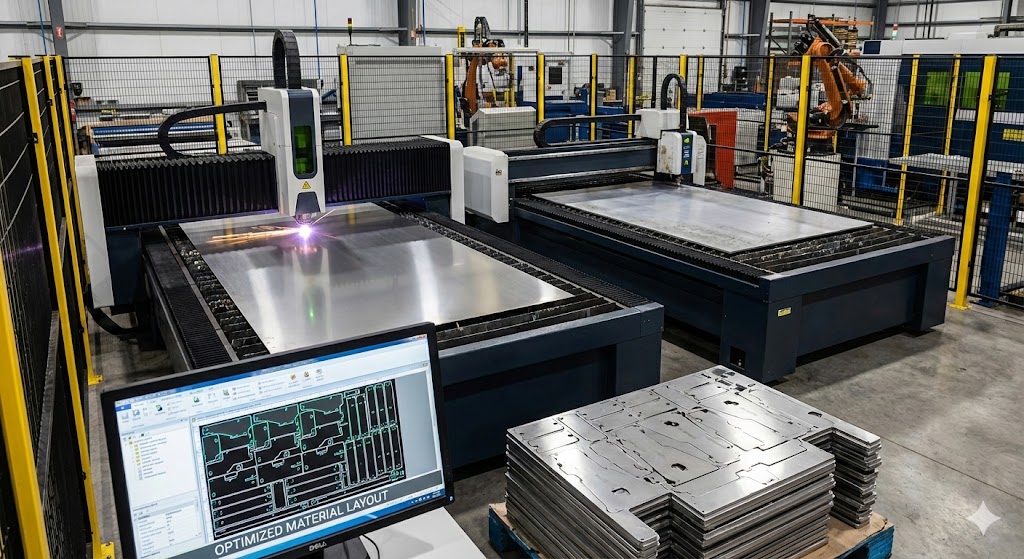
Laser cutting, bending, welding, and finishing each add their own variation.
Bending accuracy depends on material, thickness, bend radius, tooling, and measurement method.
Welding and heat can move sheet metal, especially thin parts and larger assemblies.
Inspection planning
Agree on the drawing revision, inspection method, sample size, and critical dimensions before production.
For assemblies, fit checks can be more useful than measuring every individual feature.
Appearance standards should be defined for visible surfaces, coating, scratches, and weld marks.
DFM before price negotiation
A DFM review can reduce cost by adjusting bend sequence, hole locations, fasteners, weld length, or finishing choices.
Buyers get better quotes when they share the part function and the reason behind critical requirements.
Need a quote for a real project?
Send drawings, material, quantity, finish, and destination. We will review the manufacturing route and reply with practical next steps.