Brackets and channels
Mounting brackets, U channels, L brackets, supports, and flanged parts with hole patterns or hardware.
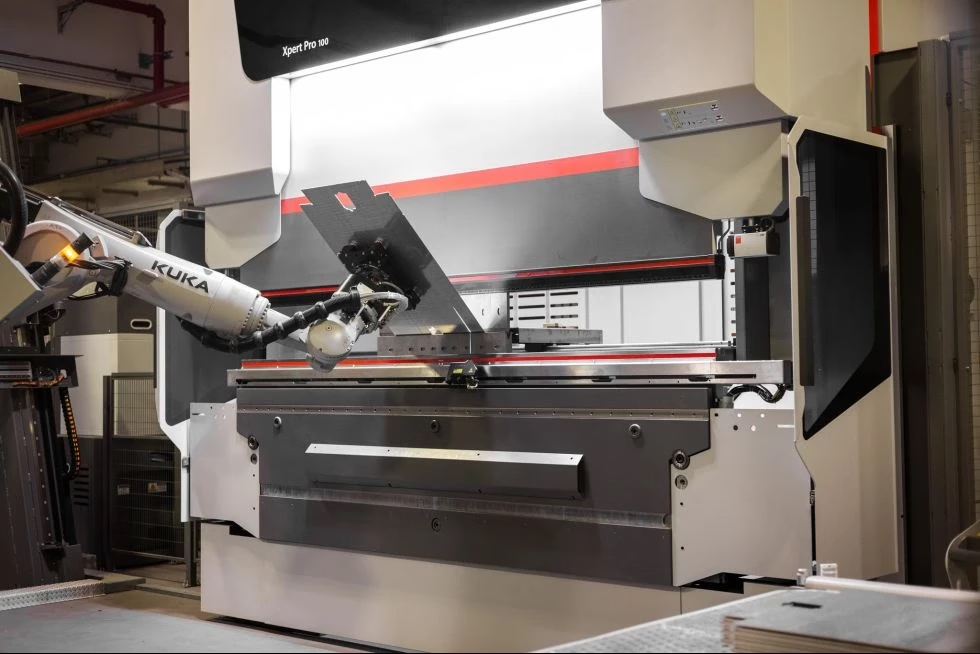
CNC bending service
Black Iron Metal supports formed brackets, channels, covers, enclosure panels, cabinet parts, and bent assemblies with RFQ review for bend radius, tooling access, hole-to-bend risk, cosmetic faces, inspection, and export packing.
Use this service when the part shape depends on controlled bends, flanges, channels, tabs, formed covers, or enclosure geometry after laser cutting.
These details help engineering review whether the formed part can be made consistently before samples or repeat production are quoted.
| Decision area | Buyer risk | RFQ detail to include |
|---|---|---|
| Bend radius and angle | Unclear radius or angle control can change blank size, fit, and inspection results. | State required inside radius and angle where critical, or allow supplier standard tooling after review. |
| Hole-to-bend distance | Holes, slots, louvers, or hardware close to bend lines can distort or interfere with tooling. | Mark critical holes, mating features, slots, PEM hardware, and any features near bend lines. |
| Dimension control | Mixed inside, outside, and flat dimensions can create quote and inspection confusion. | Provide formed drawings, 3D files, controlled dimensions, and active revision numbers. |
| Cosmetic side | Visible faces can be marked during cutting, bending, hardware insertion, finishing, or packing. | Identify visible surfaces, grain direction if relevant, protective film, finish, and handling limits. |
| Sequence and packing | Deep channels, boxed forms, hardware timing, coating, and carton limits can affect the process route. | Send assembly context, hardware side, finish sequence, carton limits, destination, and packing method. |
These part types commonly need a formed drawing review before the quote is reliable.
Mounting brackets, U channels, L brackets, supports, and flanged parts with hole patterns or hardware.
Doors, covers, trays, cabinet sides, access panels, and bent equipment housings.
Cut profiles that need downstream forming, bend-ready dimensions, burr control, and edge review.
Powder coated covers, brushed stainless panels, aluminum covers, and parts with protected cosmetic faces.
PEM nuts, studs, standoffs, hinges, locks, and fastener features planned around bend sequence.
Approved formed parts that need revision control, inspection priority, packing baseline, and annual demand planning.
Inspection should prioritize the dimensions and surfaces that drive assembly fit, finish approval, and repeat order consistency.
Check formed width, flange height, bend angle, hole alignment, mating clearances, and flatness where parts assemble.
Review visible faces, brush direction, powder coated surfaces, bend marks, edge condition, and handling damage before packing.
Keep the active drawing revision, approved sample notes, inspection focus, hardware timing, and packing method tied to repeat orders.
Use these pages to connect bending decisions with laser cutting, material behavior, full fabrication, and repeat production requirements.
Review cut profiles, bend-ready blanks, edge condition, holes, slots, material, thickness, and tolerance needs.
Review alloy, temper, bend radius, visible surfaces, anodizing or powder coating, and insert planning.
Review cutting, bending, welding, finishing, assembly, inspection, and export packing under one workflow.
If the formed part belongs to a cabinet, enclosure, control box, or OEM housing, these product pages help connect bend review with hardware, finish, assembly, and packing requirements.
Review bend radius, flange length, hole-to-bend distance, slot distortion, hardware, and bracket fit.
Review bends for doors, flanges, mounting plates, cable areas, hinges, locks, and powder coated panels.
Clarify formed edges, cosmetic faces, fit, cleaning expectations, labels, and protective packing.
Connect bend sequence with cabinet doors, vents, gasket faces, mounting points, finish, and repeat builds.
Review operator panels, mounting plates, hole patterns, formed brackets, hardware, and repeat production.
Route formed housings through material, bend radius, finish, revision, assembly fit, and export packing review.
Send formed drawings, 3D files if available, material grade, thickness, bend radius, bend direction, critical dimensions, cosmetic side, finish, quantity, destination, and packing expectations.
Flat DXF files are useful when they are approved and match the current revision. For controlled design review, buyers should also send the formed drawing or 3D file so bend allowance, tooling access, and sequence risk can be reviewed.
Holes, slots, PEM hardware, louvers, tabs, narrow flanges, deep channels, and cosmetic surfaces near bend lines should be marked for review because they can affect forming sequence, distortion, and inspection.
Send the formed drawing and key bend requirements. If online submission is unavailable, the form opens a prefilled email.
Start with name, work email, country, and project type. Quantity and drawings can be added later.
